
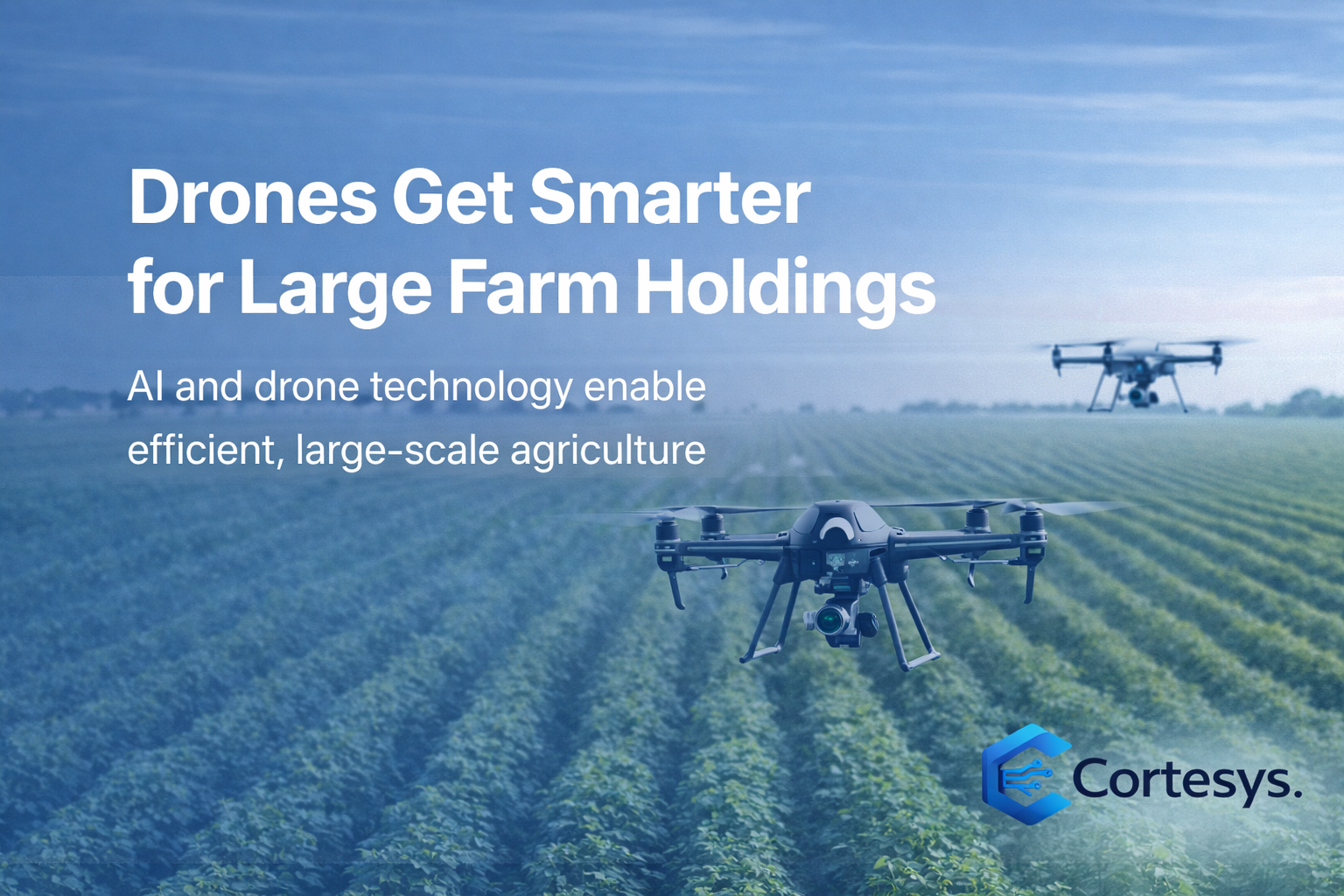

The agricultural industry is undergoing a major transformation as smart drone technology continues to evolve. What was once a futuristic concept is now becoming a practical solution for managing large-scale farm holdings with greater efficiency, accuracy, and sustainability.
With the integration of artificial intelligence, automation, and real-time data analytics, drones are no longer just flying cameras—they are becoming intelligent farming assistants.
🚜 The Rise of Smart Agricultural Drones
Modern drones are equipped with advanced sensors, GPS systems, and AI-powered software that allow farmers to monitor vast agricultural lands with minimal effort. These drones can:
- Capture high-resolution aerial images
- Analyze crop health in real time
- Detect pests and diseases early
- Optimize irrigation and fertilizer usage
This level of precision helps farmers make data-driven decisions, reducing waste and increasing productivity.
🌱 How AI is Making Drones Smarter
Artificial intelligence is the key factor behind the rapid advancement of drone technology in agriculture. AI-powered drones can:
- Automatically identify crop stress areas
- Predict yield outcomes using historical data
- Adjust spraying patterns based on crop needs
- Operate autonomously without manual control
This reduces human dependency and allows farms to operate at scale with minimal intervention.
📊 Benefits for Large Farm Holdings
For large agricultural operations, managing thousands of acres manually is both time-consuming and inefficient. Smart drones offer several advantages:
✔️ Increased Efficiency
Drones can cover large areas in minutes, significantly reducing labor and time.
✔️ Cost Reduction
Optimized use of water, fertilizers, and pesticides leads to lower operational costs.
✔️ Higher Crop Yield
Early detection of issues ensures healthier crops and improved output.
✔️ Sustainability
Precision farming minimizes environmental impact by reducing chemical overuse.
🚀 Real-World Applications
Smart drones are already being used in various agricultural activities, including:
- Crop monitoring and mapping
- Precision spraying
- Soil analysis
- Livestock tracking
- Irrigation management
These applications are helping farmers transition toward smart farming ecosystems.
⚠️ Challenges to Adoption
Despite the benefits, there are still some challenges:
- High initial investment
- Lack of technical knowledge among farmers
- Regulatory restrictions in certain regions
- Dependence on weather conditions
However, as technology becomes more accessible and affordable, these barriers are gradually decreasing.
🔮 The Future of Drone Farming
The future of agriculture lies in fully automated, AI-driven ecosystems. Upcoming advancements may include:
- Swarm drone technology for coordinated farming
- Integration with IoT-based smart sensors
- Real-time cloud-based farm management systems
- Predictive analytics for climate and soil conditions
These innovations will make farming smarter, faster, and more sustainable than ever before.
🧠 Conclusion
The evolution of drone technology is reshaping how large farm holdings operate. With AI at its core, smart drones are enabling farmers to move from traditional methods to precision agriculture, where every decision is backed by data.
As adoption continues to grow, drones will play a critical role in ensuring food security, improving efficiency, and building a more sustainable agricultural future.