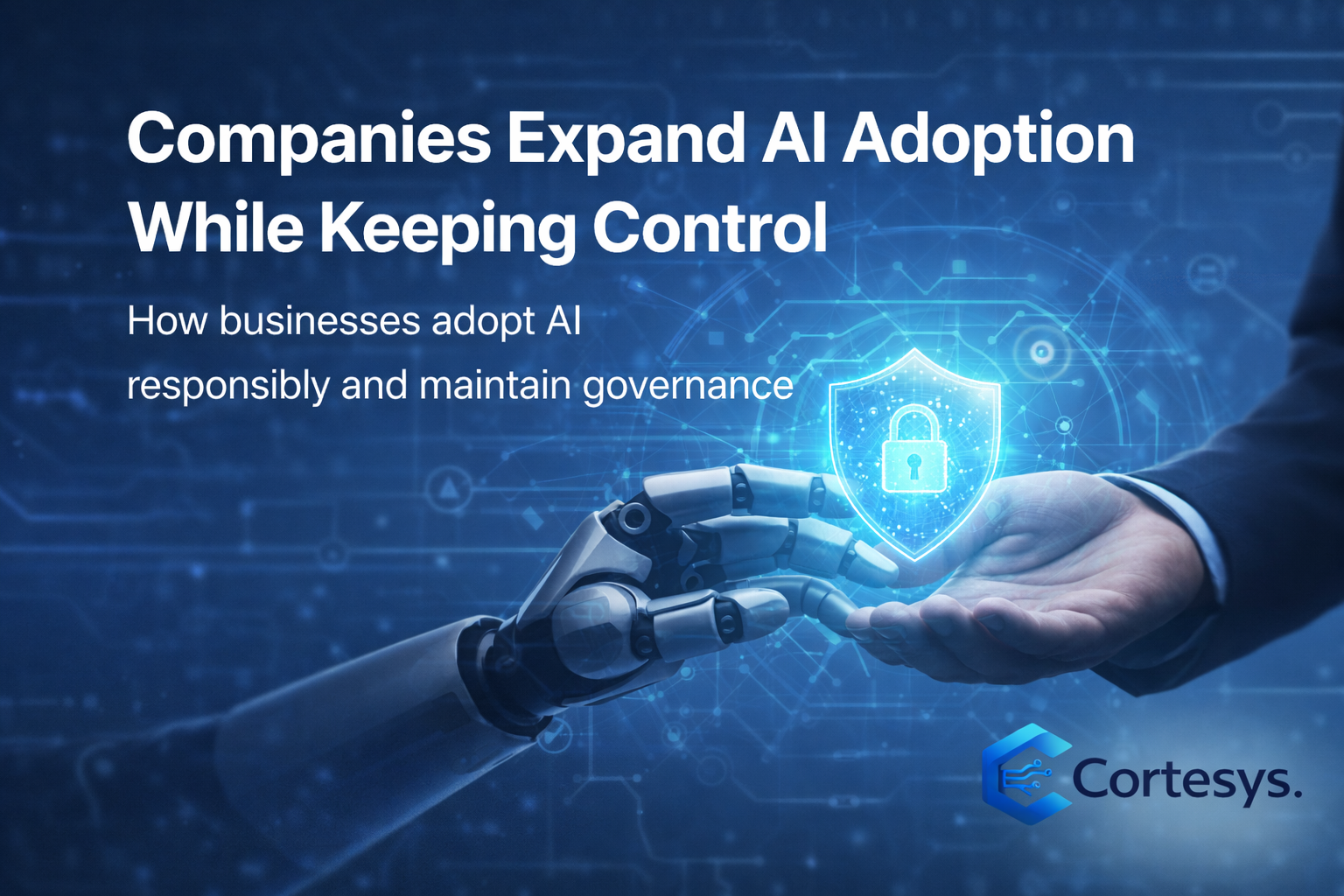

Artificial Intelligence is no longer an experimental technology—it has become a core business driver across industries. From automation to decision-making, companies are rapidly expanding AI adoption. However, alongside this growth, organizations are placing a strong emphasis on maintaining control, governance, and security.
This shift marks the beginning of a new phase: responsible and controlled AI integration.
🚀 Why AI Adoption is Accelerating
Businesses are embracing AI to gain a competitive edge and improve operational efficiency. Key drivers include:
- Automation of repetitive tasks
- Faster data analysis and insights
- Improved customer experiences
- Cost optimization and scalability
With advancements from leaders like OpenAI, Google, and Microsoft, AI tools have become more accessible and powerful than ever.
🔒 The Growing Need for Control
As AI systems become more autonomous, companies are focusing on maintaining control over how these systems operate. Key concerns include:
- Data privacy and security
- Bias and ethical decision-making
- Regulatory compliance
- Transparency in AI outputs
Organizations are now implementing AI governance frameworks to ensure systems behave predictably and responsibly.
🧠 How Companies Are Balancing Innovation and Control
To scale AI safely, businesses are adopting structured approaches:
✔️ AI Governance Policies
Clear guidelines define how AI models are trained, deployed, and monitored.
✔️ Human-in-the-Loop Systems
Critical decisions still involve human oversight to reduce risks.
✔️ Secure Infrastructure
Companies use controlled environments to test AI before full deployment.
✔️ Model Monitoring
Continuous tracking ensures AI outputs remain accurate and unbiased.
📊 Impact Across Industries
AI adoption with control is transforming multiple sectors:
- Finance: Fraud detection with strict compliance checks
- Healthcare: AI-assisted diagnosis with human validation
- Retail: Personalized recommendations with data privacy controls
- Manufacturing: Smart automation with safety protocols
This balanced approach ensures innovation without compromising trust.
⚠️ Challenges Businesses Still Face
Despite progress, organizations must navigate:
- Complex regulations across regions
- High implementation costs
- Talent gaps in AI expertise
- Integration with legacy systems
These challenges highlight the importance of a strategic AI roadmap.
🔮 The Future of Controlled AI Adoption
The future will see stronger alignment between AI innovation and governance. Expected trends include:
- AI audit systems for transparency
- Explainable AI models for better understanding
- Integration of compliance tools within AI platforms
- Increased focus on ethical AI development
Companies that successfully balance adoption and control will gain long-term advantages.
🧩 Conclusion
AI is reshaping how businesses operate, but uncontrolled adoption can lead to significant risks. By prioritizing governance, security, and transparency, companies are ensuring that AI remains a powerful yet responsible tool.
The next phase of AI growth will not just be about innovation—it will be about control, trust, and sustainability.

